What Online Shopping Can Teach Us About Recruitment: The Keyword Effect
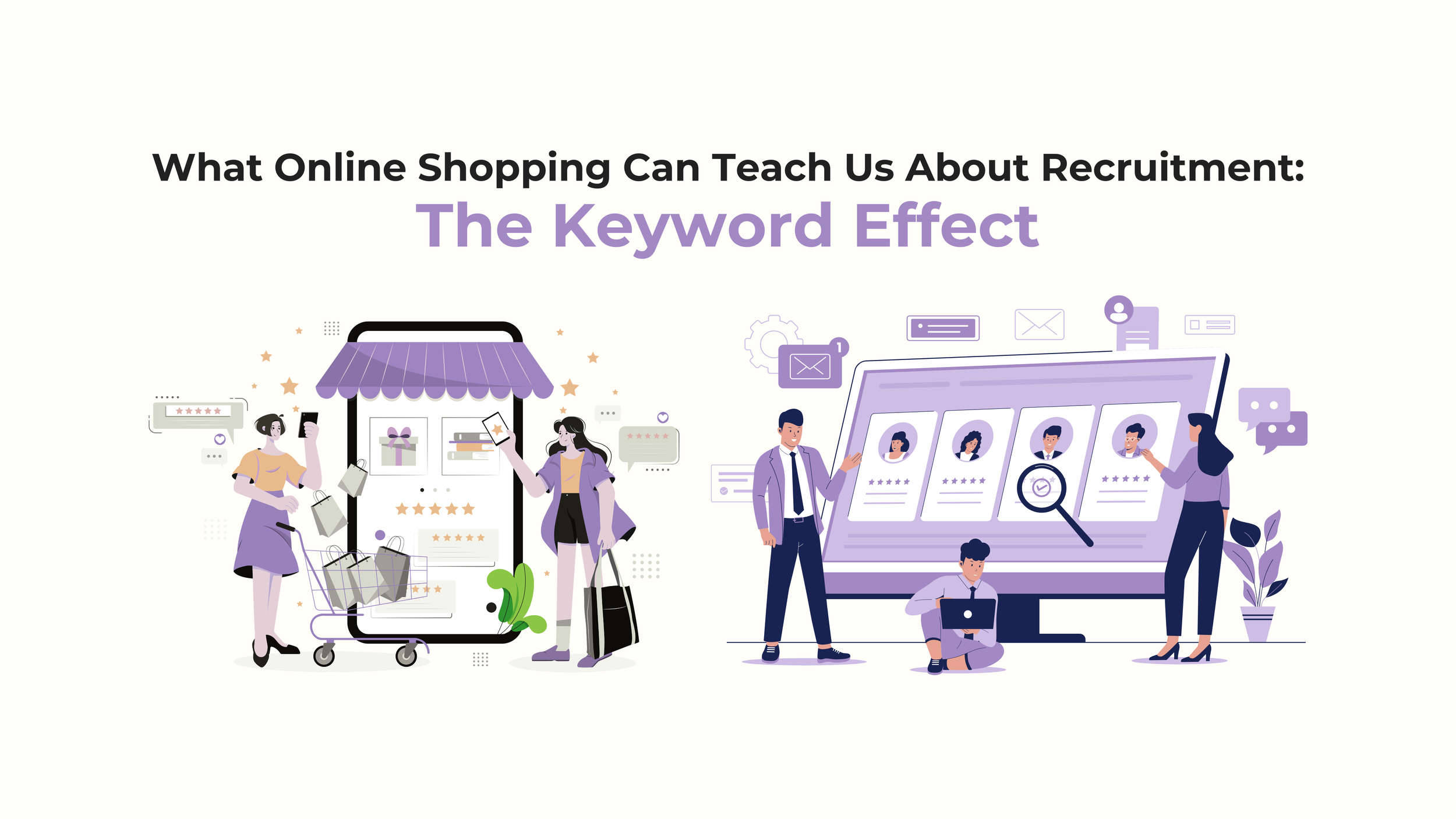
“The more keywords stuffed in, the easier it is to find.” Ring any bells?
Scroll through Lazada or Shopee and you’ll see product names that look… well, a little messy:
Women’s Bag Tote Crossbody Purse Shoulder Bag Fashion Casual Work Bag Office Bag Large Capacity Black
Men’s Sneakers Running Shoes Casual Sport Gym Lightweight Breathable Walking Jogging Fitness Tennis Shoes Black
Portable Blender Juicer Cup USB Rechargeable Smoothie Maker Bottle Mini Fruit Mixer for Travel Home Office
It’s long. It’s repetitive. It doesn’t sound like a brand name at all. You might have skipped reading that altogether.
But here’s the kicker: It works because the more keywords that appear in a product name, the easier it is for buyers to find it.
Check your purchase history, and we bet you’ll find at least one product whose name looks like this.
Easier to find → more clicks → more sales → more reviews → more trust → easier to find.
It’s a full circle, and even if it breaks the traditional “rules” of branding, it delivers results.
🔑 So, what can recruitment learn from this?
For Employers & Hiring Managers
Think of your job ads and ATS like an e-commerce search engine. If your system (or AI) is only looking for one specific keyword, you could be missing the right talent.
Some examples:
You post a role for “Customer Service Representative”
A great candidate applies, but their resume says “Call Center Agent”
Your AI filters them out because the keyword doesn’t match.
You’re hiring for a “Performance Marketing Manager.”
A candidate applies, but their resume headline says “Paid Ads Specialist – Shopee & Lazada.”
Your ATS doesn’t match the keywords, so they’re filtered out.
In both cases, you miss out on a candidate who may have been your perfect hire.
Lesson:
Optimize your ATS or AI to recognize synonyms and related terms.
Train hiring teams to look beyond rigid job titles and consider broader perspectives.
Consider how different companies and industries label the same skill set.
For Applicants
Job titles can be just as messy as product names.
For example, an e-commerce company might post a role for “Marketplace Optimization Specialist.” However, you’re an “E-commerce Merchandiser” looking at it and think: That doesn’t sound like me.
Then, when you read the job description, you realize it’s precisely what you’ve been doing: optimizing product listings, managing keywords, and boosting conversions.
A “Marketing Specialist” in one company might be called a “Growth Associate” somewhere else. A “Content Marketer” could overlap with “Copywriter,” “Content Strategist,” or even “Digital Marketing Executive.”
Lesson:
Don’t stop at the title. Read the description.
Use multiple variations of your job title (e.g., “E-commerce Merchandiser / Marketplace Specialist / Online Retail Analyst”) on your resume and LinkedIn.
Think like an SEO marketer: make yourself “searchable” with the right keywords.
🧭 The Takeaway
In both online shopping and recruitment, keywords are the bridge between what people are searching for and what’s actually out there.
Employers: Rethink how you design roles and optimize your tech.
Applicants: Be open to possibilities and position yourself with multiple keywords.
At Elite Talent Recruit, we find the right people for our clients. Our mission is to make sure great talent and great companies don’t miss each other, and we won’t let something like “naming mismatches” stop us.
If you feel it’s time to review how you’ve been handling recruitment in light of this article, it’s a sign we should connect soon!